
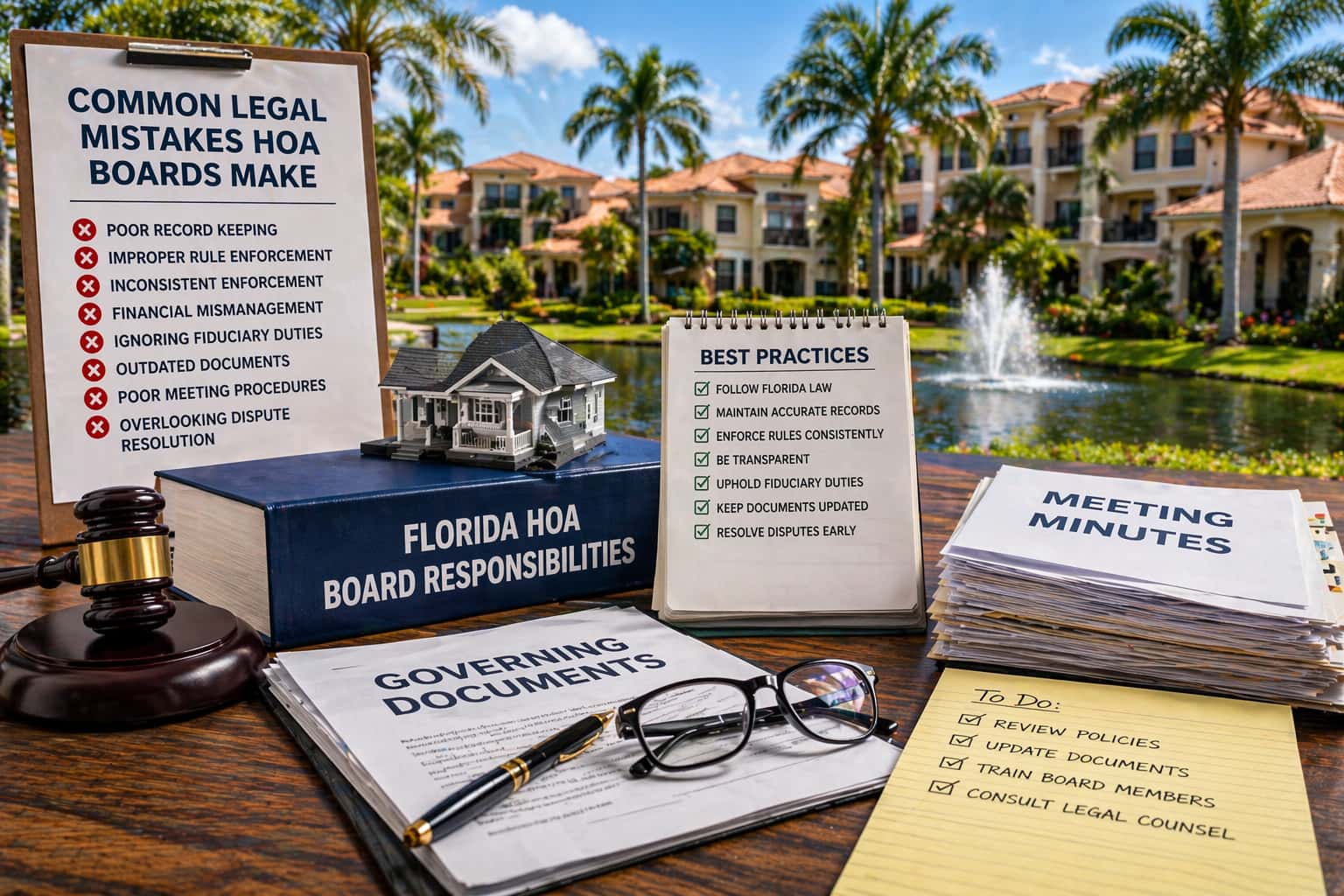
Serving on an HOA board in Florida comes with significant legal responsibility—but many boards unknowingly make critical mistakes that can lead to disputes, liability, and financial consequences. Common searches like “Florida HOA legal mistakes,” “HOA board liability Florida,” and “HOA compliance errors” highlight how frequently these issues arise.
Understanding these risks—and how to avoid them—can protect both the association and its board members.
For official legal reference, see:
Florida HOA Laws – Chapter 720
Failure to Maintain and Provide Official Records
One of the most common legal mistakes involves improper recordkeeping. Florida law gives members the right to access official records such as financial documents, contracts, and meeting minutes within specific timeframes.
Failing to provide timely access can lead to complaints, penalties, and legal challenges while also damaging trust within the community.
Enforcing Rules That Are Not Legally Valid
Not every rule adopted by an HOA board is enforceable. Policies must align with governing documents and Florida law. Rules created without proper authority or procedure may be challenged and invalidated.
Boards must ensure all rules are legally compliant before enforcement.
Improper Meeting Procedures
HOA decisions must follow strict procedural requirements, including proper notice, quorum, and documentation. Failure to follow these requirements can invalidate decisions—even if they were made in good faith.
Proper governance procedures are essential for legal compliance.
Financial Mismanagement and Lack of Transparency
Boards are responsible for budgeting, financial reporting, and maintaining reserves. Mismanagement or lack of transparency can result in disputes, audits, and increased legal exposure.
Clear financial practices and documentation are critical to maintaining trust and compliance.
Failure to Uphold Fiduciary Duties
HOA board members have fiduciary duties, including acting in good faith, avoiding conflicts of interest, and making informed decisions. Ignoring these obligations can expose board members to personal liability.
Proper oversight and professional guidance help reduce these risks.
Inconsistent Enforcement of Rules
Selective enforcement is a major source of disputes. Applying rules unevenly can lead to claims of unfair treatment and weaken enforcement actions.
Boards should apply rules consistently and maintain clear documentation of all enforcement actions.
Outdated Governing Documents
Florida laws affecting HOAs change over time. Failing to update governing documents can create conflicts with current law and increase legal exposure.
Regular updates help ensure compliance and operational clarity.
Ignoring Dispute Resolution Options
Many disputes can be resolved without litigation. Skipping mediation or internal resolution processes can escalate conflicts unnecessarily and increase costs.
Early resolution strategies are often more effective and less disruptive.
Need Help Avoiding HOA Legal Mistakes?
We help Florida HOA boards navigate compliance, reduce legal risk, and implement best practices to protect their communities.
Frequently Asked Questions
Can HOA board members be held personally liable?
Yes. Failure to meet fiduciary duties or comply with legal requirements can expose board members to personal liability in certain situations.
What makes an HOA rule unenforceable?
A rule may be unenforceable if it conflicts with governing documents, violates Florida law, or was adopted without proper procedures.
Why is record access important in HOAs?
Providing access to records is required by law and helps maintain transparency, trust, and legal compliance.
How can HOA boards avoid legal mistakes?
By following proper procedures, staying updated on Florida law, maintaining transparency, and seeking legal guidance when necessary.